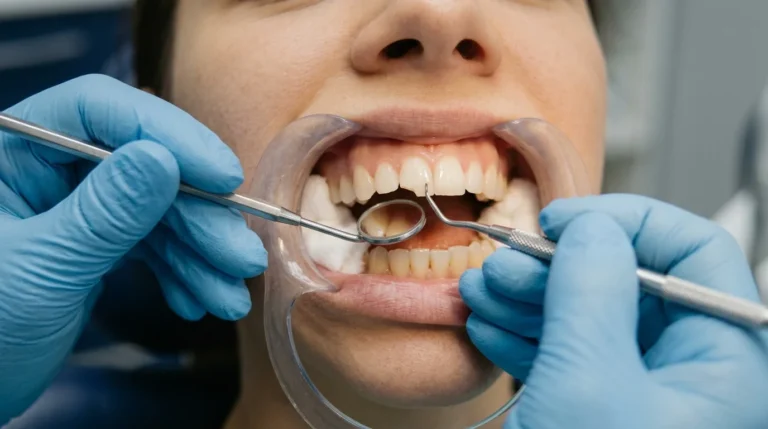
Yes, you can pay for a dental implant monthly. Diamondback accepts CareCredit, which turns a bill into monthly payments, subject to approval, and it works best as the second step rather than the first. Start by finding out what your dental insurance will pay. Whatever is left is your share, and that is what you pay directly, cover from a health savings or flexible spending account, put on a payment plan, or split between them.
The order matters because a monthly payment is built from two numbers: the share you finance and the kind of plan you take. Below is how to get both, and how to keep a "no interest" plan from adding the interest back at the end.
Can You Pay for an Implant Over Time?
Diamondback accepts CareCredit, a health credit card that lets you spread an implant bill across monthly payments, subject to approval. What goes on the plan is the share left after your insurance pays, so the monthly figure depends on that amount and on the kind of plan you choose: a promotional plan, or a longer one with fixed payments.
Already want to go over your own numbers? Request an Implant Consultation or Call and Talk With the Team at (602) 866-8183.
Start With What Your Insurance Will Pay
Insurance comes first because every dollar your plan pays is a dollar you do not have to finance. Plans do set limits. Many cap what they will pay in a year, a limit called the annual maximum, and writing in ADA News, the vice chair of the ADA's Council on Dental Benefit Programs counted annual maximums among the biggest barriers patients face, because they restrict what a plan pays regardless of what the patient needs (ADA News, 2025). On a larger treatment plan, that cap can be where the insurance share stops and your share begins.
Diamondback accepts most PPO plans. Coverage varies from plan to plan, so call to check your benefits before you plan around them. The team checks your benefits for free and files the claim with your plan directly, whether the plan is in or out of network. DeltaCare USA and other DHMO plans are not accepted. For how plans treat implants in particular, read whether insurance covers implants.

How CareCredit Works for an Implant
CareCredit is a health credit card, and Diamondback accepts it for the share your insurance leaves. You can prequalify on CareCredit's site first, which CareCredit says has no impact on your credit score, then apply only if you decide to go ahead. Prequalifying is not approval: the full application decides, and the card is subject to approval.
CareCredit lists two kinds of plan. Promotional plans charge no interest if you pay the balance in full by the end of the promotional period. Longer plans for larger amounts carry a reduced interest rate and a fixed monthly payment until the balance is paid. CareCredit also notes that not every provider offers every option, so ask the team which ones apply here.
What Decides the Monthly Payment?
Two numbers set it. The first is the amount you finance: the treatment plan, less what insurance pays and anything you pay up front. The second is the plan. A fixed-payment plan spreads that amount, with its interest, evenly to the end. A promotional plan asks only for a required minimum each month, so how much you pay above that is up to you.
That freedom is where people get caught. A "no interest if paid in full" plan is deferred interest: interest builds from the purchase date, and if any of the promotional balance is still there on the end date, all of that interest is added to your account (CareCredit FAQ). Paying only the minimum may not clear the balance in time. To keep the plan interest-free, divide the balance by the number of promotional months and pay at least that much every month. It is easy to miss: when the Consumer Financial Protection Bureau ordered GE CareCredit to refund patients in 2013, it found that many had signed up while waiting for treatment and did not understand how to avoid the deferred interest (CFPB, 2013).

Paying the Rest Directly, Including From an HSA or FSA
Paying your share directly means no credit application and nothing left to pay once treatment is done. Money in a health savings account (HSA) or flexible spending account (FSA) is one way to do it. IRS Publication 502 counts treatment to alleviate dental disease, including extractions and dentures, as a medical expense, and it leaves out cosmetic work such as teeth whitening (IRS Publication 502). Your account's administrator confirms what your plan will pay for. You can also mix the two: part directly or from an account, the rest on a plan.
How Insurance and a Payment Plan Fit on One Treatment Plan
-
01
The implant consultation
The dentist works out your treatment plan. You can read about the implant options and treatment steps before you come in.
-
02
The benefits check
The team checks, for free, what your plan is expected to pay.
-
03
A written estimate
Ask for one that shows the insurance share and your share separately. For the treatment amounts themselves, see what an implant costs at Diamondback.
-
04
Your share
Pay it directly, from an HSA or FSA, on a CareCredit plan, or with a mix.
-
05
The claim
The office files it with your plan directly.
If cost is the reason a tooth has waited, nobody here will lecture you about the delay. The point of the visit is to lay the numbers out plainly.

Bring Both Numbers to Your Consultation
At the consultation, the insurance share and your share are set side by side, and you can ask which CareCredit plans the office offers, subject to approval.
Questions to Ask Before You Apply
What if I am not approved for CareCredit?
▾
My insurance is out of network. Who does the plan pay?
▾
Can I prequalify before my consultation?
▾
How do I know when a promotional period ends?
▾
Why does this page not give a monthly amount?
▾
Sources
- CareCredit, Frequently Asked Questions. carecredit.com/faqs Prequalifying, deferred interest, promotional and reduced-APR plans.
- Consumer Financial Protection Bureau. CFPB Orders GE CareCredit to Refund $34.1 Million for Deceptive Health-Care Credit Card Enrollment 2013.
- ADA News. Dear ADA: annual maximums December 2025.
- Internal Revenue Service. Publication 502, Medical and Dental Expenses 2025, Dental Treatment.
Request an Implant Consultation
You know now which two numbers decide a monthly payment. The consultation puts both on paper: what your plan is expected to pay, and the share left for you to cover.