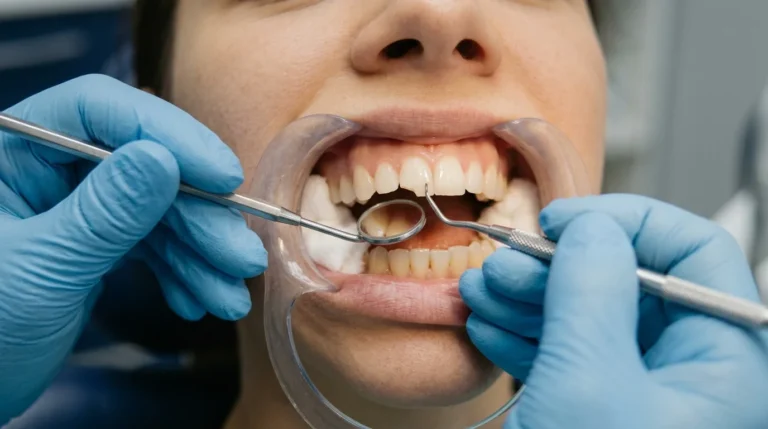
Whether dental insurance covers implants in Phoenix depends on your plan, but most PPO policies pay 0 to 50 percent of a single implant that typically runs $3,000 to $5,000 including the crown. This guide explains what dental insurance does and does not pay toward a dental implant, how yearly maximums shape your out-of-pocket cost, and which plans Diamondback Dentistry accepts in North Phoenix. It is general information, individual results vary, and you should confirm the details with a dentist and your insurer before treatment.
Does dental insurance cover implants in Phoenix?
Sometimes. Many PPO dental plans cover 0 to 50 percent of a dental implant in Phoenix as a major restorative service, but a yearly maximum of about $1,000 to $1,500 caps the payout. Original Medicare covers nothing. Diamondback Dentistry accepts most major PPO plans and verifies your benefits at no charge before treatment.
Implant Package
Single Tooth Dental Implant Package
What's included
- Consultation and treatment plan
- Surgical implant placement
- Final restoration (the crown)
Prices vary based on individual case complexity. Request a consultation for an accurate estimate.
Book a ConsultationKey Things to Know About Implant Insurance Coverage
- 01Most dental plans treat implants as a major restorative service and cover 0 to 50 percent after your deductible, according to the National Association of Dental Plans.
- 02A yearly maximum of about $1,000 to $1,500 limits what any plan pays in a benefit year, so insurance rarely covers a full implant at once.
- 03Some plans exclude the implant post itself but still help with the crown, abutment, extraction, or bone graft.
- 04Original Medicare does not cover dental implants, though some Medicare Advantage dental plans do.
- 05Diamondback Dentistry accepts most major PPO plans, files claims directly, and verifies your benefits at no charge before treatment.
Typical yearly dental insurance maximum
Most PPO dental plans cap total annual payouts at roughly $1,000 to $1,500. Because a single implant usually costs more than that, insurance often covers only part of the treatment in any one year.
Source: National Association of Dental Plans
How Dental Insurance Covers Implants
Dental insurance can help pay for an implant, but coverage is partial and plan specific. Most plans classify a dental implant as a major restorative service and pay 0 to 50 percent of the eligible cost after your deductible, up to a yearly maximum. That means insurance rarely covers the whole treatment, and the details vary from one policy to the next.
The National Association of Dental Plans notes that dental plans are not required to cover implants at all, and some carriers add a frequency limit such as one implant per year. Reading your plan's exclusions matters as much as reading its coverage percentage.
What Insurance Usually Pays For
When a plan does cover implant treatment, it often pays toward the individual parts rather than the implant as a single item. Commonly covered pieces include the crown that sits on top, the abutment that connects the crown to the post, any tooth extraction needed first, and bone grafting when the jaw needs to be built up before placement.
Even partial help adds up. If your plan pays half of the crown and the extraction, that can offset a meaningful share of your total. Diamondback Dentistry files your claim directly and applies the payment to your treatment, so you see the benefit on your estimate rather than chasing a reimbursement later.
What Insurance Often Will Not Pay For
The implant post itself, the titanium screw placed in the jaw, is the piece most often left out. Some plans exclude implants as elective or cosmetic, and others apply a missing tooth clause that denies coverage if the tooth was lost before the policy began. Waiting periods of six to twelve months for major work are also common on newer plans.
None of this means an implant is out of reach. It means you want a clear read on your benefits before treatment, which is exactly what a benefits verification gives you.
Annual Maximums and Why They Matter for Implants
A yearly maximum is the most a plan will pay in one benefit year. With a typical cap of $1,000 to $1,500, a plan can reach that limit quickly on a treatment that costs several thousand dollars. One practical strategy is to time treatment across two benefit years, using this year's maximum for the extraction and graft and next year's for the implant and crown. Your plan resets its maximum at the start of each benefit year, so the calendar can work in your favor.
Dental Insurance Plans We Accept in Phoenix
We accept most major PPO dental plans and file claims directly for you. We verify your benefits at no charge before treatment begins. Coverage varies by plan, so call to confirm your implant benefits.
PPO plans we accept
Financing
We do not accept DeltaCare USA, DHMO or HMO plans, or Arizona Medicaid (AHCCCS) directly. AHCCCS is accepted only through the UnitedHealthcare APIPA plan. For any balance your plan does not cover, CareCredit financing is available.
Medicare, Medicaid, and Verifying Your Benefits
PPO plans are the most common way patients cover part of an implant, and Diamondback Dentistry accepts the major carriers, including Delta Dental PPO, Cigna dental PPO, Aetna dental PPO, and MetLife dental PPO. You can see the full list of dental coverage we accept on our site. Government plans work differently, and the rules are easy to get wrong.
Original Medicare and Medicare Advantage
Original Medicare (Parts A and B) does not cover routine dental care or dental implants, according to Medicare.gov. Coverage opens up through Medicare Advantage, where some plans add a dental benefit. Diamondback Dentistry accepts Medicare Advantage dental plans through Blue Cross, Aetna, Humana, and Cigna. Benefits and annual limits vary widely between Advantage plans, so verify what your specific plan allows for major restorative work before you schedule.
AHCCCS (Arizona Medicaid)
We do not accept Arizona Medicaid directly. AHCCCS is accepted only through the UnitedHealthcare APIPA contractor. Adult dental benefits under Medicaid are limited and rarely extend to elective implant treatment, so most implant patients on a government plan pay out of pocket or use financing. We are happy to talk through the options at your consultation.
How to Verify Your Implant Benefits
Before any treatment, bring your insurance card and we will verify your benefits at no charge, then give you a written estimate that shows what your plan pays and what you owe. We file claims directly for all plans we work with, in and out of network. One note on out of network plans: we do not offer assignment of benefits, which means the insurer reimburses you rather than paying us directly. You can also check your coverage in 2 minutes with our short online quiz.
What Implants Cost in Phoenix With and Without Insurance
Knowing the sticker price helps you judge how far your benefits go. In the Phoenix area, a single dental implant typically costs $3,000 to $5,000 including the crown, based on regional market data and the American Dental Association's fee surveys. Diamondback Dentistry's implant package is priced at $2,999. For a full breakdown, see our guide to dental implant cost in Phoenix. Prices vary based on individual case complexity. Request a consultation for an accurate estimate.
Cost by Implant Type
Implant treatment is not one price because it is not one procedure. What you pay depends on how many teeth you are replacing and how much groundwork the jaw needs first.
Single Tooth Implant Cost
A single tooth implant replaces one missing tooth with a titanium post and a crown. The Phoenix market range is $3,000 to $5,000, and Diamondback Dentistry's single tooth implant package is $2,999, which covers the consultation, treatment plan, surgical placement, and final crown.
All-on-4 and Full Mouth Implant Cost
Replacing a full arch changes the math. All-on-4 dental implants and full mouth dental implants use several posts to anchor a full set of teeth. Market estimates for both arches range widely, often $28,000 to $60,000, and the final figure depends on the number of implants, grafting, and materials. Prices vary based on individual case complexity. Request a consultation for an accurate estimate.
Same-Day Implant Cost
With same-day dental implants, a temporary tooth is placed at the same visit as the post, so you leave with a tooth in place while the implant heals. Pricing depends on your specific case, and a consultation gives you a written estimate before anything begins.
The Out-of-Pocket Gap
Here is where coverage and cost meet. If a single implant runs about $3,000 to $5,000 and your plan pays half up to a $1,000 to $1,500 maximum, insurance may cover roughly $1,000 to $1,500 and you cover the rest. That gap is why a transparent package price and a financing plan matter as much as the coverage percentage on your card.
Implant vs. Bridge: How Coverage Compares
Some dental plans reimburse a dental bridge more readily than an implant. Here is how the two compare on coverage and longevity. Longevity figures reflect general dental literature (American Dental Association); individual results vary.
| Factor | Dental Implant | Dental Bridge |
|---|---|---|
| How plans classify it | Major restorative; sometimes excluded as elective | Major restorative; more consistently covered |
| Typical coverage | 0 to 50 percent, up to your annual maximum | Around 50 percent, up to your annual maximum |
| Effect on nearby teeth | Stands alone; neighbors untouched Preserves jawbone | Neighboring teeth are reshaped to hold the bridge |
| Typical longevity | Often 15 years or more with good care | Around 5 to 15 years |
Financing and Ways to Lower Your Out-of-Pocket Cost
Insurance covers part of an implant for many patients, and a few other tools help close the gap between your benefits and the total cost.
CareCredit Financing
CareCredit is a healthcare credit line that lets you spread implant costs over monthly payments. You can prequalify with no credit impact through CareCredit's own tool, then apply the line to the balance your plan does not cover. Approval and terms are set by CareCredit, not by our office, and financing is subject to credit approval.
New Patient Special and In-House Savings
New patients can start with our $19 new patient special, which covers a full exam and X-rays only, not a cleaning. It is a low-cost way to get the imaging and evaluation an implant plan starts with. See our current patient specials and new patient information for details. Prices vary based on individual case complexity. Request a consultation for an accurate estimate.
We also offer an in-house membership for patients without dental insurance. It is a savings program, not insurance, and it is a separate option for people who are paying cash. We will explain how it works and whether it fits your situation at your visit.
Is a Dental Implant Right for You?
An implant is a strong long-term option for a missing tooth. Dental implants have a long clinical track record, with studies reporting 10-year survival rates around 95 percent, according to the American Association of Oral and Maxillofacial Surgeons. Many patients keep an implant for 15 years or more with routine care, though individual results vary. Candidacy depends on healthy gums and enough jawbone to hold the post, which an exam and imaging confirm.
Some conditions call for extra planning before an implant:
- Uncontrolled diabetes or another condition that slows healing
- Active gum (periodontal) disease
- Significant jawbone loss, which may need a bone graft first
- Heavy smoking, which raises the risk of implant failure
If any of these apply to you, talk with a dentist before moving forward. You can also see if you are a candidate with our short quiz. At a consultation, we review your health history, take the imaging, and walk through whether an implant, a bridge, or a denture is the better fit for your case and your budget.
Common Questions About Implant Insurance Coverage in Phoenix
Does dental insurance cover dental implants in Phoenix?
▾
What percentage of a dental implant does insurance usually pay?
▾
Why do some plans call implants cosmetic?
▾
What is a dental annual maximum, and how does it affect implant coverage?
▾
Does insurance cover the crown but not the implant post?
▾
Does Medicare cover dental implants?
▾
Does Medicare Advantage cover implants in Phoenix?
▾
Does AHCCCS (Arizona Medicaid) cover dental implants?
▾
Which dental insurance plans does Diamondback Dentistry accept?
▾
How much does a dental implant cost with insurance in Phoenix?
▾
Is a bridge covered better than an implant?
▾
What if my insurance will not cover an implant?
▾
How do I find out what my plan covers before treatment?
▾
Sources and References
- National Association of Dental Plans. Dental benefits, implant coverage, and annual plan maximums. nadp.org Coverage percentages and yearly maximums.
- American Dental Association. Dental implants and the Survey of Dental Fees. ada.org Implants as major restorative work; cost context.
- Medicare.gov. Dental services coverage under Original Medicare. medicare.gov Original Medicare dental exclusion.
- American Association of Oral and Maxillofacial Surgeons. Dental implant outcomes and survival. aaoms.org Implant survival and longevity.
Schedule an Implant Consultation in Phoenix
Bring your insurance card and we will verify your benefits at no charge, then give you a written estimate before any treatment. Call (602) 866-8183 or book online.
Service Area
Diamondback Dentistry serves North Phoenix and the surrounding North Valley, just off Bell Road near I-17.
Neighborhoods served
- North Phoenix
- Deer Valley
- Peoria
- Moon Valley
- Glendale
ZIP codes in catchment
- 85023
- 85022
- 85021
- 85029
- 85051
- 85027
Diamondback Dentistry · 1512 W Bell Rd, Suite C-6, Phoenix, AZ 85023 · (602) 866-8183