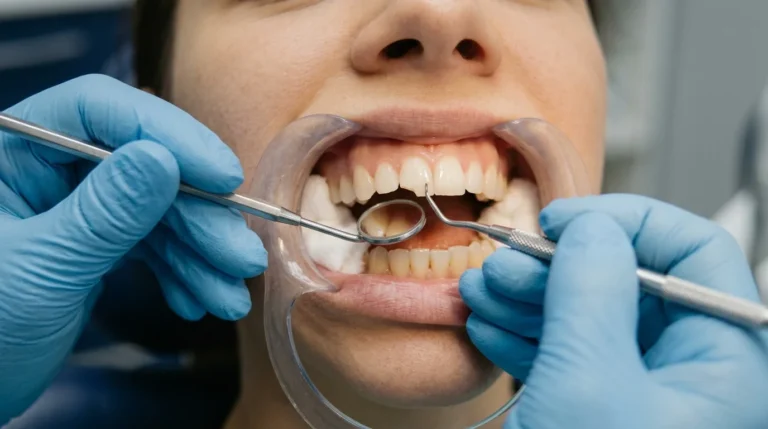
There are 7 clear signs you should see a dentist, and knowing them helps North Phoenix families act before a small problem turns into a painful, costly one. Some are loud, like a throbbing tooth at night. Others are quiet, like gums that bleed when you brush. Diamondback Dentistry sees these patterns every week, and this guide covers what each one means and when to call.
When should you see a dentist?
See a dentist if you have persistent tooth pain, bleeding or receding gums, lasting hot and cold sensitivity, a mouth sore that will not heal within two weeks, a loose adult tooth, jaw pain or clicking, or ongoing bad breath. Diamondback Dentistry evaluates all 7 of these signs for patients across North Phoenix.
Key things to know
- 01Severe tooth pain, a knocked-out tooth, uncontrolled bleeding, or facial swelling is urgent, not a wait-and-see situation.
- 02Bleeding gums are common and most treatable when caught early. The CDC reports that about 47% of adults age 30 and older have some form of gum disease.
- 03A mouth sore that has not healed within two weeks should be checked, because early evaluation matters for oral cancer.
- 04Routine exams catch most of these signs before they hurt. The American Dental Association recommends regular checkups.
- 05New patients can start with Diamondback Dentistry's $19 exam and X-rays, and most major PPO plans are accepted.
of adults 30 and older have gum disease
According to the U.S. Centers for Disease Control and Prevention, about 47% of adults age 30 and older have some form of periodontal (gum) disease. Bleeding or swollen gums are often the first sign, and early care gives the best chance to stop it from getting worse.
Source: U.S. Centers for Disease Control and Prevention (CDC)
Why these warning signs matter in North Phoenix
Dental problems rarely fix themselves. A cavity does not reverse once it reaches the inner tooth, and gum disease does not clear up without treatment. The gap between a quick fix and a major procedure is often just a few months of waiting. That is why recognizing a warning sign early, and acting on it, usually means less pain, less time in the chair, and a smaller bill.
Catching problems early is also the cheaper path. A routine exam and a filling cost far less than a root canal and crown on the same tooth later. Spotting the signs is the first step, and it is one you can do at home.
The local context
Diamondback Dentistry sits on West Bell Road near the I-17 corridor, serving North Phoenix, Deer Valley, Peoria, Moon Valley, and Glendale. Phoenix is dry, and dry mouth is common here, whether from the climate, common medications, or mouth-breathing at night. Less saliva means less natural protection against decay, so some local patients see cavities and sensitivity build faster than they expect. The signs below apply anywhere, but they are worth watching closely in a desert climate.
Who this applies to
This guide is for adults and parents deciding whether a symptom is worth a visit. It is also for anyone who has put off the dentist because of cost, nerves, or a busy schedule. If that is you, you are not alone, and you will not be judged for it. Use the seven signs to sort what can wait from what should not.
The 7 signs you should see a dentist
Each sign below follows the same pattern: why it matters, what to do about it, and when to contact a provider. Read the ones that match what you are feeling, and use the escalation notes to decide how quickly to act.
1. Persistent or throbbing tooth pain
A toothache that lasts more than a day or two is usually a sign of a problem that will not fix itself. Ongoing or throbbing pain can mean decay has reached the nerve, or that there is an infection or abscess inside the tooth.
Why it matters
Pain is the tooth's warning system. Left alone, an infected tooth can worsen and the infection can spread. The American Association of Endodontists notes that root canal treatment in North Phoenix is designed to remove that infection and save the natural tooth, and it is a routine, comfortable procedure with modern anesthesia.
What to do about it
Over-the-counter pain relief and avoiding very hot or cold foods can help for a short time, but they do not treat the cause. Book a dental exam so the tooth can be evaluated with an X-ray. The sooner it is seen, the more likely it can be saved.
When to contact a provider
Call promptly for pain that lasts more than two days or wakes you at night. Pain with fever or facial swelling needs urgent care that day. If swelling affects your breathing or swallowing, call 911.
2. Bleeding, swollen, or receding gums
Healthy gums do not bleed during normal brushing, so regular bleeding is worth a dentist's attention. Swollen, red, tender, or receding gums are early signs of gum disease.
Why it matters
Gum disease is a leading cause of tooth loss in adults, and it often has no pain in the early stages. Caught early as gingivitis, it can usually be reversed. Left alone, it can progress to periodontitis and bone loss. Our guide to the early signs of gum disease covers what to watch for.
What to do about it
Improve your daily brushing and flossing, and book a professional cleaning and gum evaluation. A hygienist can measure your gum health and remove the hardened plaque that brushing cannot reach.
When to contact a provider
See a dentist if bleeding continues for more than a week, or if you notice gums pulling away from teeth, pus, or a bad taste. These point to active infection that needs treatment.
3. Tooth sensitivity to hot and cold
A quick twinge from ice cream is normal. Sensitivity that lingers, or that shows up in one specific tooth, can signal something that needs attention.
Why it matters
According to the American Dental Association, lasting sensitivity can come from worn enamel, a cracked tooth, an exposed root, gum recession, or a cavity. A cracked tooth in particular tends to get worse, so pinning down the cause early helps you avoid a bigger repair. Our overview of how to handle tooth sensitivity explains the common triggers.
What to do about it
Try a desensitizing toothpaste, use a soft-bristled brush, and cut back on acidic foods and drinks. If the sensitivity lasts more than a week despite these steps, have it checked.
When to contact a provider
Book a visit for sharp pain when you bite down, or pain that lingers after something cold. These can point to a cracked tooth or nerve involvement that will not settle on its own.
4. A mouth sore or spot that will not heal
Most mouth sores heal within about two weeks. A sore, a red or white patch, or a lump that sticks around longer should be evaluated.
Why it matters
The American Cancer Society estimates that more than 58,000 people in the United States are diagnosed with oral or oropharyngeal cancer each year, and early detection improves outcomes. Diamondback Dentistry includes an oral cancer screening as part of a routine dental exam and cleaning, so many spots are found before they become a problem.
What to do about it
Note how long the sore has been there. If it passes two weeks, book an exam and point it out. Screening is quick and simple, and most findings turn out to be harmless.
When to contact a provider
See a dentist promptly for any sore, patch, or lump lasting two weeks or more, or with numbness, a lasting rough spot, or trouble swallowing. Early evaluation is what matters most.
5. Loose or shifting adult teeth
Adult teeth should never feel loose, and they should not drift or change how they fit together. Movement usually signals a problem under the gumline.
Why it matters
The National Institute of Dental and Craniofacial Research links loose adult teeth most often to advanced gum disease and the bone loss that comes with it. Grinding and injury can also play a role. Acting early can save the tooth, and if a tooth is already lost, there are clear options for missing teeth to restore function.
What to do about it
Do not wiggle or test a loose tooth, which can make it worse. Book an exam so the cause can be found. Treatment may involve deep cleaning, gum therapy, a bite adjustment, or a plan to replace the tooth if needed.
When to contact a provider
Call promptly for any loose adult tooth. A tooth that loosens suddenly after an injury, or one with swelling and pain, needs urgent same-day attention.
6. Jaw pain, clicking, or locking
Jaw pain, a popping or clicking sound when you chew, soreness when you wake up, or a jaw that catches can all point to a problem with the jaw joint or the muscles around it.
Why it matters
The National Institute of Dental and Craniofacial Research estimates that TMJ disorders affect roughly 5% to 12% of adults. Symptoms are often tied to clenching or grinding, and they can bring headaches and worn teeth over time. A dentist can look at the joint, your bite, and your teeth together as part of rehabilitative dental services.
What to do about it
Soft foods, a warm compress, and easing stress can calm a flare-up. If you grind at night, ask about a custom night guard. Track when the pain happens so the dentist has a clear picture.
When to contact a provider
See a dentist if jaw pain is frequent or getting worse, or if your jaw locks open or closed. A locked jaw is a same-day concern.
7. Persistent bad breath or a bad taste
Occasional bad breath after coffee or garlic is normal. Bad breath that will not go away, or a lasting bad taste, can be a symptom rather than a diet problem.
Why it matters
The American Dental Association notes that persistent bad breath can be caused by gum disease, cavities, an infection, or chronic dry mouth. Because dry mouth is common in the Phoenix climate, ongoing bad breath is worth checking. Consistent preventive dental care addresses most causes.
What to do about it
Drink more water, clean your tongue, and floss daily to clear trapped food and bacteria. If the problem continues despite good hygiene, book an exam to rule out decay or gum disease.
When to contact a provider
See a dentist if bad breath comes with pain, swelling, or a bad taste that will not clear, which can signal an infection that needs treatment.
What to do next
Once you recognize a sign, the next step depends on how severe it is. Most of these signs call for a booked exam within a week or two. A few call for urgent care the same day. Here is how to sort it out.
Simple steps you can take at home
Brush twice a day with fluoride toothpaste, floss once a day, and rinse with warm salt water to soothe mild gum irritation. Over-the-counter pain relief can help short term. These steps support your care, but they do not replace a professional exam when a sign persists.
When to book a dental exam
Book an exam if any sign lasts more than a few days, or if a mouth sore passes two weeks. If you are choosing a new practice, our guide on how to choose a dentist in North Phoenix can help. New patients at Diamondback Dentistry can start with the $19 exam and X-rays below, and most major PPO plans are accepted.
When it is a dental emergency
A knocked-out tooth, uncontrolled bleeding, severe pain, or facial swelling calls for urgent or emergency dental care right away. If swelling makes it hard to breathe or swallow, call 911. Diamondback Dentistry offers same-day emergency visits when possible. Call before noon and the team will do their best to see you that day.
New patient special
New patient exam and X-rays
What's included
- A comprehensive dental exam
- A full set of digital X-rays
- Time to review the findings and next steps with the team
The $19 new patient special covers a comprehensive exam and X-rays only, not a cleaning or treatment. Any treatment you choose is quoted separately. Prices vary based on individual case complexity. Request a consultation for an accurate estimate.
See new patient detailsCommon questions about seeing a dentist
How do I know when I should see a dentist?
▾
How often should adults see a dentist for a checkup?
▾
Is a toothache always an emergency?
▾
Are bleeding gums serious?
▾
Should I see a dentist for a canker sore, or wait?
▾
What does it mean if an adult tooth feels loose?
▾
Can bad breath be a sign of a dental problem?
▾
What if I haven't seen a dentist in years?
▾
Does Diamondback Dentistry accept my insurance?
▾
What is the Diamondback Dentistry new patient special?
▾
Sources and references
- American Dental Association, reasons to see a dentist. MouthHealthy: 12 Signs You Need to See a Dentist American Dental Association (MouthHealthy)
- Periodontal disease prevalence in US adults. CDC: About Periodontal (Gum) Disease U.S. Centers for Disease Control and Prevention
- Root canal treatment and saving a natural tooth. American Association of Endodontists: Patient Resources American Association of Endodontists
- TMJ disorders overview and prevalence. NIDCR: TMJ Disorders National Institute of Dental and Craniofacial Research
- Oral and oropharyngeal cancer statistics. American Cancer Society: Oral Cavity and Oropharyngeal Cancer American Cancer Society
Book a dental exam in North Phoenix
If one of these signs sounds familiar, the next step is a simple exam. Diamondback Dentistry serves North Phoenix, Deer Valley, Peoria, Moon Valley, and Glendale, and new patients can start with the $19 exam and X-rays. Most major PPO plans are accepted.
Service area
Diamondback Dentistry serves North Phoenix and the surrounding North Valley along the Bell Road and I-17 corridor.
Neighborhoods served
- North Phoenix
- Deer Valley
- Peoria
- Moon Valley
- Glendale
ZIP codes in catchment
- 85023
- 85022
- 85021
- 85029
- 85051
- 85027
Diamondback Dentistry · 1512 W Bell Rd, Suite C-6, Phoenix, AZ 85023 · (602) 866-8183