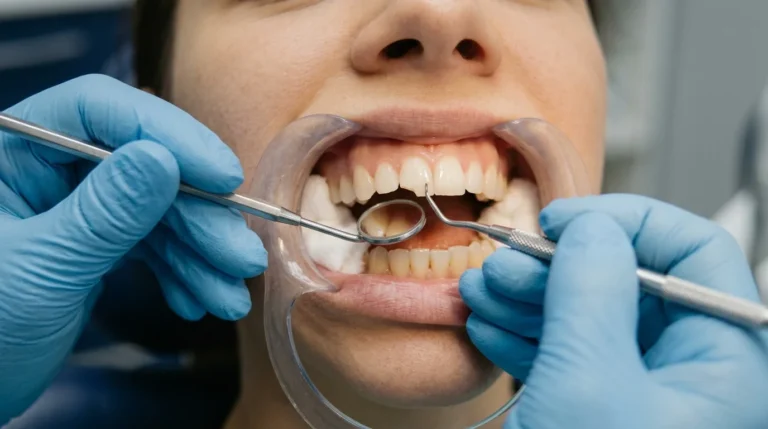
Dental implants with bone loss are still possible for most Phoenix patients in 2026, thanks to options like bone grafting, mini implants, zygomatic implants, and All on 4 techniques that work with compromised bone. Being told you do not have enough bone for an implant can feel like a closed door, but for most patients it is the start of a different plan, not the end of one.
Bone loss usually changes the path, not the destination. The right route depends on how much bone is left, where the loss sits, and your overall health, which is what Dr. Pouria Owtad reviews with 3D imaging at a consultation at Diamondback Dentistry in North Phoenix.
Quick Answer
Can You Get Dental Implants With Bone Loss?
Most patients with bone loss can still get dental implants in Phoenix. The right option depends on how much bone is left and where the bone loss is located. Common paths include bone grafting before a standard implant, mini implants, zygomatic implants for severe upper jaw bone loss, and All on 4 for full arch cases. Diamondback Dentistry evaluates each case with 3D imaging at the consultation.
Key Things to Know About Implants and Bone Loss
- Bone loss is common after tooth loss and is rarely a permanent disqualification from dental implants.
- Six main option categories exist: bone grafting, sinus lift, ridge augmentation, mini implants, zygomatic implants, and All on 4 for compromised bone.
- Candidacy depends on three measurements: bone volume, bone density, and the location of the bone loss in the jaw.
- A bone graft or sinus lift typically adds three to nine months of healing time before the implant is placed.
- Diamondback Dentistry uses 3D cone beam imaging at the consultation to choose the right option and provides a written treatment estimate before any work begins.
What Causes Bone Loss in the Jaw
Bone loss in the jaw has a few common causes. Knowing which one applies to you helps explain why a certain implant option fits your case. The jaw bone is living tissue. It changes when a tooth is lost or an infection sets in. Here are the three causes we see most often.
Long Term Missing Teeth
The jaw bone needs the daily pressure of chewing to stay strong. When a tooth is missing, the bone in that spot starts to shrink within weeks. Most of the loss happens in the first six to twelve months. After that it keeps shrinking slowly over the years. This is why a tooth that has been missing for a long time often leads to bone changes. Placing an implant or a small graft soon after the tooth comes out can protect the bone before it is lost.
Periodontal (Gum) Disease
Gum disease is the leading cause of bone loss in adults. The infection slowly breaks down the bone that holds the teeth in place. Sometimes the bone is lost evenly across the ridge. Other times it forms deep pockets around certain teeth. Either way, the pattern affects which implant option will work. Treating active gum disease comes first. A healthy foundation has to be in place before any implant planning begins.
Trauma or Tooth Extraction
A sudden injury or a hard extraction can damage the bone directly. To prevent that, some extractions include a small graft at the same visit. This keeps the bone stable for a future implant. If you already know you want an implant later, ask about this graft when the tooth is removed. Protecting bone is much easier than rebuilding it.
How Bone Loss Affects Implant Candidacy
Not all bone loss is the same. Before recommending an option, the dentist looks at three things:
- Bone volume. How much bone you have.
- Bone density. How solid that bone is.
- Location. Where in the jaw the loss has happened.
All three matter. An option that fits the front of the lower jaw may not fit the back of the upper jaw.
To measure these, Dr. Owtad uses a 3D cone beam CT scan. A regular dental X ray is flat. A cone beam scan is three dimensional, so it shows the height, width, and density of the bone in each spot. That detail is what makes a clear plan possible.
How the bone loss usually guides the option:
- Mild bone loss. A standard implant is often still an option.
- Moderate bone loss. A bone graft or sinus lift is usually the first step before the implant goes in.
- Severe bone loss, upper jaw. Zygomatic implants or All on 4 may be the better fit.
- Severe bone loss, lower jaw. Mini implants or All on 4 are often the options to consider.
One important point. This page explains the options. It does not diagnose you. The right answer for any one person comes from imaging and an exam, not from a web page. The consultation is where your bone gets measured and your real options get put on the table.
Why Time Matters
Bone loss starts fast after a tooth is removed
Bone in the jaw needs the daily pressure of chewing to keep its volume. After a tooth is lost, the bone in that spot starts to shrink within weeks. The most noticeable loss happens in the first six to twelve months. This is why a same visit socket preservation graft is often suggested when a tooth is pulled and an implant is part of the future plan.
Your Options for Dental Implants With Bone Loss
Bone loss does not mean one single fix. There are several ways to work with it, and the right one depends on how much bone is left and where it sits. Below are the six main options. Some rebuild the bone first. Others work around the thin areas. At your consultation, Dr. Owtad walks through which of these fits your case and quotes it in writing before any work starts.
Bone Grafting Before Implants
A bone graft is the most common path for moderate bone loss. The idea is simple. Material is placed where the bone is thin, and over time your body builds new bone around it. That new bone gives the implant something solid to anchor into.
Healing takes time. The graft usually needs three to nine months to mature before the implant goes in. Once it is ready, the implant is placed the same way it would be in natural bone.
A graft is a good fit when there is enough healthy bone to build on, just not quite enough yet for the implant. In Phoenix, a bone graft typically adds $300 to $3,000 to the cost of the implant, depending on the size of the graft and the material used. You can read more about the procedure on our dental implants page.
Types of Bone Graft Material
Not all grafts use the same material. There are four main kinds, and Dr. Owtad will talk through which one suits your case at the consultation.
- Autograft. Your own bone, usually taken from another spot in your mouth. It has the highest success rate, but it adds a second site to heal.
- Allograft. Donor bone from a tissue bank. It is processed and safe, and it skips the second surgical site.
- Xenograft. Bone from another species, most often cow. It is widely used and well studied.
- Synthetic. Man made material such as calcium phosphate. No donor is needed at all.
Each works in the same basic way. The material gives your body a frame to build new bone on. The choice comes down to your case and what you are comfortable with.
Sinus Lift for Upper Jaw Implants
A sinus lift is used when an implant is planned in the upper back jaw and there is not enough bone below the sinus. The sinus sits just above the upper molars, so when bone there is thin, the implant has nowhere solid to sit.
The fix is to gently raise the sinus membrane and place graft material underneath. That creates the room the implant needs. Healing usually takes four to nine months before the implant goes in. In Phoenix, a sinus lift typically adds $1,500 to $5,000 to the cost of the implant.
Ridge Augmentation
Ridge augmentation is used when the jaw ridge has become too narrow or too short to hold an implant. When the ridge shrinks, there may not be enough width or height for a post.
Graft material is added to rebuild it in the direction it is lacking. This is sometimes done during a tooth extraction, or as a separate step before the implant. Healing usually takes four to eight months. In Phoenix, ridge augmentation typically adds $500 to $3,500 to the cost of the implant.
Mini Dental Implants
Mini implants are smaller posts than standard implants, usually 1.8 to 3.0 millimeters across. Because they are thinner, they need less bone to hold them.
They are most often used to steady a lower denture, and sometimes to replace a single tooth in a narrow ridge. Placement is usually simpler and can often be done in one visit. In Phoenix, mini implants typically run $500 to $1,500 each.
One honest note. Mini implants do not fit every case, and for full bite single tooth work they lack the long track record standard implants have.
Zygomatic Implants
Zygomatic implants anchor into the cheekbone instead of the upper jaw. That lets them bypass severe upper jaw bone loss completely, so grafting may not be needed.
They are meant for patients with severe upper jaw bone loss who would otherwise face heavy grafting. Placement is done under general anesthesia by a specialist. Many patients get a fixed set of teeth the same day or soon after.
At Diamondback Dentistry, these cases are reviewed at the consultation, and Dr. Owtad refers you to a maxillofacial specialist if your case calls for it. In Phoenix, zygomatic implants typically run $5,000 to $10,000 each, with full arch cases higher.
All on 4 for Compromised Bone
All on 4 replaces a full upper or lower set of teeth with four implants and one fixed bridge. The two back implants are angled, up to 45 degrees, so they reach the denser bone toward the front of the jaw.
That angle is the key. It lets All on 4 work around the thin areas, so grafting can often be avoided. Most patients leave with a temporary fixed set the same day. You can learn more on our full mouth dental implants page.
In Phoenix, All on 4 typically runs $20,000 to $30,000 per arch. The final set of teeth is fitted after healing, usually three to six months later.
Bone Loss Implant Options at a Glance
How the six main options for dental implants with bone loss compare on typical case fit, timeline, and Phoenix cost range.
| Option | Typical Case Fit | Timeline + Phoenix Cost Range |
|---|---|---|
| Bone Grafting Before Implant | Moderate bone loss at the implant site | Three to nine months healing before the implant; adds $300 to $3,000 to implant cost |
| Sinus Lift | Implants planned in the upper back jaw with a low sinus floor | Four to nine months before the implant; adds $1,500 to $5,000 to implant cost |
| Ridge Augmentation | A narrow or shallow ridge | Four to eight months before the implant; adds $500 to $3,500 to implant cost |
| Mini Dental Implants | Lower denture support or narrow ridge cases | Often one visit; $500 to $1,500 per mini implant |
| Zygomatic Implants | Severe upper jaw bone loss; specialist referral | Often a same day fixed set; $5,000 to $10,000 per implant |
| All on 4 for Compromised Bone | A full upper or lower arch with widespread bone loss | Often a same day temporary; $20,000 to $30,000 per arch |
Phoenix ranges are from an April 2026 review of competing practices. Your case fit and final cost are confirmed at a Diamondback Dentistry consultation with 3D imaging.
What to Expect From the Bone Loss Implant Process
Most bone loss implant cases at Diamondback Dentistry follow the same five steps. The exact timeline depends on which option fits your case.
Consultation and 3D Imaging
Dr. Pouria Owtad checks your bone volume, density, and location with a cone beam CT scan.
Treatment Planning
The right option is chosen and quoted in writing before any work begins.
Preparatory Procedure
If you need a graft, sinus lift, or ridge augmentation, it is done first and given time to heal.
Implant Placement
Once the foundation is ready, the implant is placed in the prepared site.
Final Restoration
After the implant fuses to the bone, the final crown, bridge, or full set of teeth is fitted.
3 to 6 months for standard implants
Common Questions About Dental Implants With Bone Loss
Can you get dental implants with bone loss?
Most patients with bone loss can still get dental implants. The right path depends on how much bone remains and where the loss is located. The six common options are bone grafting, sinus lift, ridge augmentation, mini implants, zygomatic implants, and All on 4. A 3D cone beam scan at the consultation determines the right fit.
How much bone is needed for a dental implant?
A standard dental implant usually needs at least 5 to 8 millimeters of bone height and 5 to 6 millimeters of bone width at the site. Below that, a bone graft, mini implant, zygomatic implant, or All on 4 is usually the next option. The exact requirement varies by implant system and case.
How long does the bone graft for dental implants take to heal?
A bone graft for dental implants usually takes 3 to 9 months to heal before the implant is placed. A small socket preservation graft may heal in 3 to 4 months. A larger ridge augmentation or sinus lift may take 6 to 9 months. Diamondback Dentistry confirms readiness with imaging before placing the implant.
Can you get dental implants without a bone graft?
Some patients with bone loss can get dental implants without a bone graft, usually through three routes: mini implants, zygomatic implants, or All on 4 with angled posterior implants. These work with the bone you have instead of rebuilding it. A 3D cone beam scan determines whether a no graft path is possible.
Are mini dental implants a good option for bone loss?
Mini dental implants can be a good option for some bone loss cases, especially for steadying a lower denture or placing a tooth in a narrow ridge. They are usually 1.8 to 3.0 millimeters across, smaller than standard implants. They are not right for every case, and the long term record for full bite single tooth use is shorter than for standard implants.
What are zygomatic dental implants used for?
Zygomatic dental implants are used for patients with severe upper jaw bone loss who would otherwise need extensive bone grafting. The implant anchors into the cheekbone instead of the upper jaw. Placement is done under general anesthesia by a maxillofacial specialist, often with a fixed set of teeth the same day.
Is All on 4 a good option for someone with bone loss?
All on 4 is often a strong option for patients with widespread upper or lower bone loss. The four implants are placed strategically, with the two back implants angled up to 45 degrees to reach the denser bone toward the front of the jaw. This avoids grafting in many cases and usually delivers a same day or near same day temporary set of teeth.
How much do dental implants with bone loss cost in Phoenix?
Dental implants with bone loss in Phoenix vary by case, plus the cost of any preparatory procedure: bone graft $300 to $3,000, sinus lift $1,500 to $5,000, ridge augmentation $500 to $3,500. Full arch and zygomatic cases are quoted on a case basis. Typical PPO plans cover 0 to 50 percent of implant cost, plan by plan, less than they cover for bridges. Ask about our implant cost guide at your consultation for a written estimate.
What is the success rate of dental implants with bone grafting?
The success rate of dental implants placed after bone grafting is usually 90 to 95 percent over 10 years, similar to implants in natural bone, per the American Dental Association. Outcomes depend on overall health, smoking, and oral hygiene. Diamondback Dentistry reviews these factors at the consultation.
Bone Loss? We Have Options
Schedule a Bone Loss Implant Consultation in North Phoenix
A 3D cone beam scan and a written treatment estimate are the right first step for any bone loss implant case. Dr. Pouria Owtad reviews the imaging, walks through which option fits, and quotes the case in writing before any work begins.
Dental Implants in North Phoenix
Diamondback Dentistry is at 1512 W Bell Rd, Suite C6, Phoenix, AZ 85023, between 15th Ave and 17th Ave on Bell Road. The office is about 1.5 miles east of the I 17 and Bell Road interchange. We see implant patients from across the North Valley.
Neighborhoods we serve
- Moon Valley
- Deer Valley
- North Mountain Village
- Sunnyslope
- Paradise Valley Village
- Desert Ridge
- Happy Valley
- Arrowhead
- Peoria
- Glendale
Diamondback Dentistry · 1512 W Bell Rd, Ste C6, Phoenix, AZ 85023 · (602) 866-8183