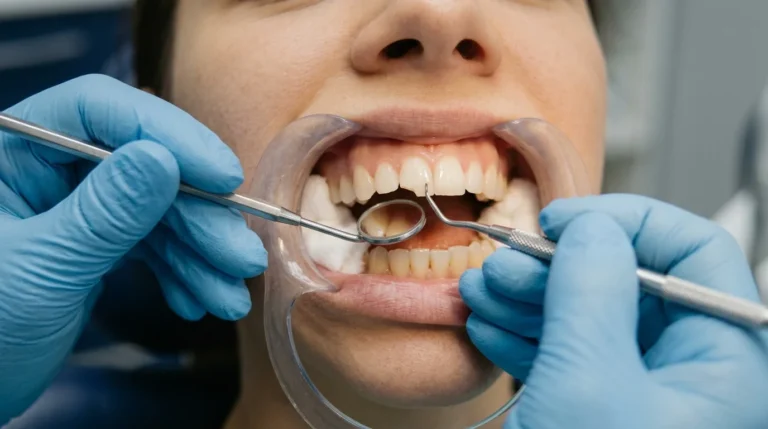
Most chipped or broken teeth are not emergencies, but they all need a dentist, and what you do before the appointment affects whether the tooth needs bonding, a crown or a root canal. One injury is different: a knocked-out permanent (adult) tooth has its best chance of being saved within the first 20 to 30 minutes. This guide helps you work out which injury you have, then covers what to do, what to save and where to go.
What do I do in the next 15 minutes?
Rinse your mouth with warm water. If it is bleeding, press clean gauze on the spot for 10 minutes. Put a cold compress on the outside of your cheek. Save any broken piece in milk. Then call Diamondback Dentistry in North Phoenix at (602) 866-8183. If a whole permanent (adult) tooth was knocked out, hold it by the crown, try to put it back in the socket or keep it in milk, and get to a dentist or a hospital emergency room within 30 minutes. Do not wait for our office to open.
Three Things That Change the Next 24 Hours
- 01A knocked-out permanent (adult) tooth is the one injury that cannot wait for an appointment. Most other breaks can be kept clean and protected until you are seen. This one needs a dentist or an emergency room within minutes.
- 02No pain does not mean no damage. A crack can be there before it hurts, and cracks do not heal.
- 03Save the piece that broke off. Kept moist, it can sometimes be bonded back on.
How Bad Is It? Triage by What Broke
Not every broken tooth is the same problem. The right answer depends on what gave way. If you are unsure whether yours counts, our guide to what counts as a dental emergency covers the wider list.
Chips, Cracks and a Broken Cusp
Start here. A small chip in the enamel is the least urgent version. Bonding or a tooth-colored filling usually repairs it. Book within a week so the rough edge does not cut your tongue or catch and break further.
A broken cusp, the pointed part of a back tooth, changes how you bite. It often needs an inlay, an onlay or a dental crown.
A cracked tooth is the one people underestimate. The usual sign is pain that comes and goes when you chew, sometimes sharpest as you release the bite rather than as you bite down. Per the American Association of Endodontists, a crack that extends into the root can require root canal treatment and a full-coverage crown, and a split tooth may need to be removed. Cracks do not heal, and an untreated crack tends to get worse.
Exposed Nerve
A pink or red center in the break means the nerve may be exposed. That is where severe, throbbing pain comes from. Call us the same day. Until you are seen, biting gently on clean, moist gauze can ease the pain. Do not put a numbing gel or ointment on the tooth or gum.
A Knocked-Out Tooth
A tooth knocked completely out is the most time-sensitive injury on this page. For a permanent (adult) tooth:
- Pick it up by the crown, the part you chew with. Do not touch the root.
- If it is dirty, rinse it briefly in water. Do not scrub it.
- If you can, gently push it back into its socket, then bite on clean gauze or a cloth to hold it in place.
- If you cannot, keep it moist in milk or between your cheek and gum. Do not let it dry out.
- Get to a dentist immediately. The best chance of saving the tooth is within the first 20 minutes, and treatment within 30 minutes is the goal. If our office is closed or you cannot reach a dentist that fast, go to a hospital emergency room.
Do not put a knocked-out baby tooth back in. Replanting a baby tooth can damage the permanent tooth growing underneath it. Bring the tooth and your child to a dentist instead.
If Our Office Is Closed
Call (602) 866-8183 first. If the office is closed, what you do next depends on what broke.
- A chip, a crack or a broken cusp without severe pain. Keep the area clean, use a cold compress, cover a sharp edge with dental wax from a pharmacy, and stay on soft foods. Then call us when the office reopens.
- An exposed nerve with severe pain. The American Dental Association's advice for a dental emergency is to see a dentist or go to an emergency room as soon as possible. Do not try to wait it out.
- A knocked-out permanent (adult) tooth. Go to a hospital emergency room right away, with the tooth back in its socket or in milk. It cannot wait for us to open.
What Happens at Your Visit
We start with an exam and X-rays. The visible part of a broken tooth rarely tells the whole story. Once we know how deep the damage goes, you get a written estimate before treatment begins.
Repair usually means one of five things: bonding for a small chip, a tooth-colored filling, an inlay or onlay for a larger piece of a back tooth, a crown when too much structure is gone, or root canal treatment when the nerve is involved. If the tooth is split below the gum line, emergency tooth extraction may be the only option. Local anesthesia numbs the area, and we take steps to keep you comfortable during the repair.
If you call before noon, we will do our best to see you the same day. We cannot promise it, because it depends on what is already on the schedule. Call (602) 866-8183 and tell the front desk what happened.
More on broken tooth repair in North Phoenix and our emergency dental services.
When to Go to an ER Instead of a Dentist
Some of these injuries are medical emergencies, not dental ones. Go to the nearest hospital emergency department, or call 911, if you have trouble breathing or swallowing, facial swelling spreading toward your eye or down your neck, bleeding that has not stopped after 15 minutes of steady pressure, a jaw that will not open or close normally, or confusion or loss of consciousness after the impact. Go to the emergency room too if a permanent (adult) tooth has been knocked out and you cannot get to a dentist within about 30 minutes.
A broken tooth from a fall or a blow to the head is a head injury first and a dental problem second. Once you are cleared medically, call us and we will take the tooth from there.
Common Questions in the Next 24 Hours
Is a chipped tooth a dental emergency?
▾
What should I do with the piece of my tooth that broke off?
▾
My tooth is cracked but it does not hurt. Can I wait?
▾
How long do I have if a tooth was knocked completely out?
▾
Sources and References
- American Association of Endodontists. Traumatic Dental Injuries. Guidance on fractured, dislodged and knocked-out teeth, including the 30 minute window, why baby teeth are not replanted, and what affects the outcome.
- American Association of Endodontists. Cracked Teeth. Symptoms of a cracked tooth, why cracks do not heal, and how treatment ranges from a crown to root canal treatment or extraction.
- American Dental Association, MouthHealthy. Dental Emergencies. First-aid steps for a cracked or knocked-out tooth, and when to see a dentist or go to an emergency room.
- International Association of Dental Traumatology. Knocked Out. Step-by-step first aid for a knocked-out permanent tooth and the 20 minute window.
- International Association of Dental Traumatology. Broken Teeth. What to do with a broken piece of tooth.
Call Us Before You Wait It Out
Broken tooth in North PhoenixDiamondback Dentistry is at 1512 W Bell Rd, Suite C-6, Phoenix, AZ 85023. Call (602) 866-8183 and tell us what happened. We accept most major PPO plans, including Delta Dental, Humana, Cigna, Aetna and Blue Cross Blue Shield, and we verify your benefits before treatment. DeltaCare USA and direct AHCCCS are not accepted, and AHCCCS is accepted only through the UnitedHealthcare APIPA contractor. Call to verify your coverage.
Service Area
Diamondback Dentistry sees emergency and broken tooth patients from across the North Valley, along the Bell Road and I-17 corridor.
Neighborhoods served
- North Phoenix
- Deer Valley
- Peoria
- Moon Valley
- Glendale
Diamondback Dentistry · 1512 W Bell Rd, Suite C-6, Phoenix, AZ 85023 · (602) 866-8183