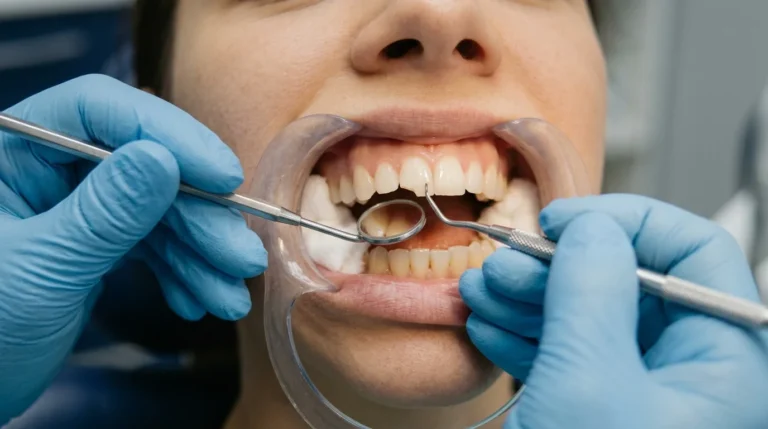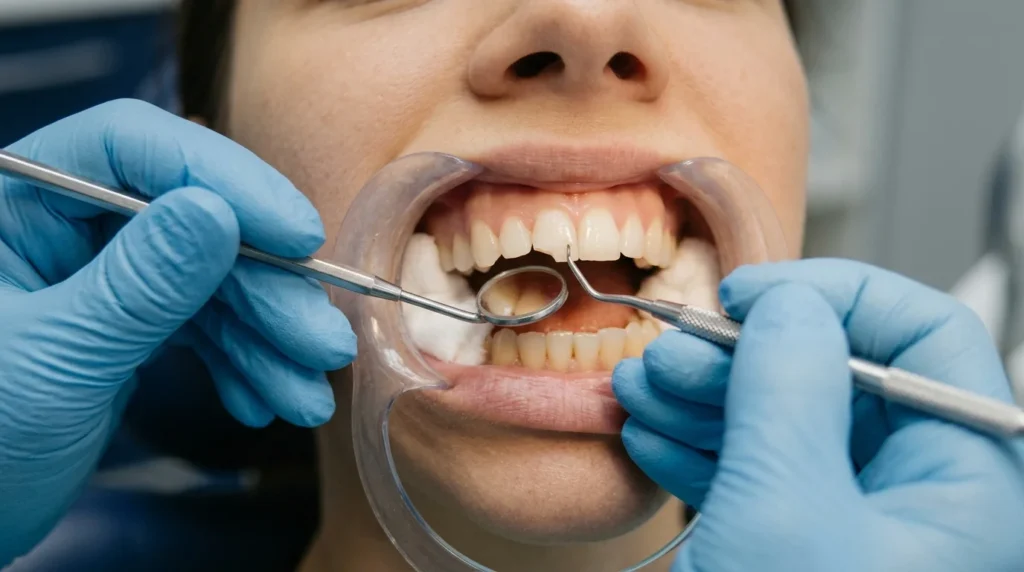
Veneers, bonding, and crowns all fix a front tooth in Phoenix, and the honest way to choose between them is how much natural tooth each one costs you. At Diamondback Dentistry in North Phoenix we walk patients through this decision most weeks, and it almost never comes down to price first. It comes down to how much healthy enamel is still there. The second question is whether the tooth needs protecting or just needs to look better. This guide compares the three on tooth structure, lifespan, cost, insurance, and daily upkeep, including porcelain veneers and what they permanently change about the tooth underneath.
Veneers, bonding, or a crown: which one do I need?
Bonding, veneers, and crowns remove progressively more tooth. Bonding removes almost none and is the reversible option. Veneers remove enamel permanently. Crowns remove the most and are the structural choice for a cracked or heavily filled tooth. Diamondback Dentistry offers all three in North Phoenix.
Veneers vs. bonding vs. crowns at a glance
Read the first row first. Everything else follows from how much tooth each option removes.
| Criterion | Bonding | Porcelain veneers | Crowns |
|---|---|---|---|
| Tooth structure removed | Little to none Reversible | Enamel off the front surface, permanently | The most of the three, all the way around |
| What it fixes | Small chips, gaps, minor stains, worn edges | Shape, spacing, and stains across several front teeth | Cracked, weakened, or heavily filled teeth |
| Typical lifespan | About 7 years on average for the resin (ADA) | 95.5 percent still in place at 10 years | 94.7 percent still in place at 5 years |
| Typical Phoenix cost per tooth | $300 to $600 | $900 to $2,500 | $800 to $2,500 |
| Repairable in the chair | Yes, resin can be added to or reshaped | No, a damaged veneer is usually replaced | No, a damaged crown is usually replaced |
| Stain resistance | Lower, resin picks up coffee and wine over time | High, glazed porcelain resists staining | High, same glazed ceramic surface |
| Usually covered by insurance | Usually not, if done for appearance | Usually not, treated as cosmetic | Often yes, when it restores a damaged tooth |
In this guide
Key things to know
- 01The three options sit on a ladder of how much natural tooth they remove. Bonding is at the bottom, crowns at the top.
- 02Veneer treatment is not reversible. The American Dental Association is explicit that enamel is removed to place one.
- 03A crown is the structural answer. Choose it when the tooth needs holding together, not just improving.
- 04Insurance usually follows the reason, not the material. Restoring a damaged tooth is often covered. Improving a healthy one usually is not.
- 05Bonding is the only one of the three that can be repaired in the chair rather than replaced.
What dental bonding is
Dental bonding is tooth-colored composite resin applied directly to a tooth, shaped by hand, and hardened with a curing light. It is the most conservative of the three because it adds material rather than taking much away. Nothing is sent out to be made. The tooth is finished the same day it is started.
Bonding uses the same class of material as a tooth-colored composite filling, applied for appearance instead of decay. That shared material is why bonding behaves the way it does over time, both in how it can be repaired and in how it picks up stain.
How bonding works
The dentist lightly roughens the enamel surface, applies a bonding agent, then builds up the resin in layers and sculpts it to match the tooth. A curing light hardens each layer. The surface is polished at the end so it reflects light the way enamel does.
When bonding is recommended
Bonding suits small, contained problems on an otherwise healthy tooth. A chipped corner on a front tooth. A gap between two teeth that is narrow enough to close with resin. A worn edge on a lower incisor. A single discolored spot that whitening will not lift.
It is less suited to teeth under heavy bite force, or to cases where six or eight front teeth all need to match. Resin can be matched to one tooth reliably. Matching eight of them, and keeping them matched for years, is harder.
What porcelain veneers are
A porcelain veneer is a thin ceramic shell bonded to the front surface of a tooth. It sits in the middle of the ladder. Less tooth is removed than for a crown, more than for bonding. What comes off does not grow back.
How veneers work
A small amount of enamel is reduced from the front of the tooth. That makes room for the shell. An impression or digital scan is taken, the veneer is fabricated, and it is bonded into place at a later appointment. A temporary usually protects the tooth in between.
Components of a veneer
The ceramic shell
The shell is the visible half. Glazed porcelain resists staining, holds its color, and reflects light in a way composite resin does not quite match over the long term.
The bonded enamel surface
The bond underneath matters more than most patients expect. A 2024 systematic review and meta-analysis in the Journal of Prosthetic Dentistry found that veneers bonded to enamel survived at 99 percent, while veneers bonded to composite resin survived at 94 percent. Keeping the bond on enamel is a clinical priority, not a detail.
When veneers are recommended
Veneers make sense when several front teeth need to change together, when stains will not respond to whitening, or when shape and spacing need correcting on teeth that are otherwise structurally sound. They are a poor fit for a tooth that is cracked or heavily filled, because a veneer covers a tooth without holding it together.
What dental crowns are
A crown covers the entire visible portion of a tooth. It is the most involved of the three and removes the most tooth structure, and in exchange it is the only one that provides real structural protection. Diamondback Dentistry places dental crowns in North Phoenix as a restorative treatment rather than a cosmetic one.
How crowns work
The tooth is reduced on all surfaces so the crown can fit over it like a cap. An impression or scan is taken, the crown is fabricated, and it is cemented or bonded at a later appointment with a temporary in place in between. Because it wraps the whole tooth, it distributes bite force rather than concentrating it on a weak spot.
Crown materials
Material choice affects both appearance and strength, and the right answer depends on which tooth is being restored. Front teeth and molars are not asked to do the same job. Our guide to crown materials goes through the options in more depth.
Porcelain and ceramic crowns
All-ceramic crowns look closest to natural enamel and are the usual choice for teeth that show when you smile. Modern lithium-disilicate and zirconia ceramics are considerably stronger than the ceramics of twenty years ago.
Metal and porcelain-fused-to-metal crowns
Metal-based crowns trade some appearance for strength and are often used on back teeth. They also have the longest clinical track record, which is why they anchor most of the survival research.
When a crown is recommended
The American Dental Association lists the situations where a crown is indicated: strengthening a tooth with a large filling when little tooth structure remains, protecting a weak tooth from breaking, restoring a tooth that has already broken, attaching a bridge, and covering a dental implant. A root-canal-treated tooth usually needs one too, because the remaining tooth is more brittle. If you are dealing with a chipped or broken tooth, that is the situation a crown exists for.
How much tooth each one costs you
This is the comparison that matters most, and it is the one most guides bury under price. Enamel does not grow back. Every other difference here can be revisited later. This one cannot.
Bonding removes little to no enamel
Bonding adds material to the tooth and typically requires only light surface preparation. If a bonded repair fails or you change your mind about it, the tooth underneath is largely as it was. Among the three, this is the option you can walk back.
Veneer enamel removal is permanent
The American Dental Association states it plainly: veneer treatment "is not reversible because tooth enamel is removed to place a veneer." Once a tooth is prepared for a veneer, it will need a veneer or a crown from then on. That is not an argument against veneers. It is an argument for being certain before starting.
Crowns remove the most tooth
A crown requires reduction on every surface, which is more than a veneer and far more than bonding. The trade is real protection for a tooth that needs it. When a tooth is already cracked or mostly filling, there is not much healthy structure left to preserve, and the calculation changes entirely.
How they differ on cost
Price ranks the three in the same order as tooth removal, which means cost and clinical need usually point the same way. The figures below are Phoenix market ranges from published sources. They are not our fees. Prices vary based on individual case complexity, so the only accurate number is the one that follows an exam.
Bonding cost range
Bonding in Phoenix generally runs $300 to $600 per tooth, with simple single-chip repairs reported as low as $150. It is the least expensive of the three by a wide margin, which is part of why it is often the right first step for a small problem.
Veneer cost range
Porcelain veneers in Phoenix generally run $900 to $2,500 per tooth depending on material and preparation. Because veneers are usually placed across several teeth at once, the per-tooth figure understates what a full case costs.
Crown cost range
Crowns generally run $800 to $2,500 per tooth, with Phoenix-specific surveys clustering nearer $1,200 to $1,500. Coverage changes this number more than material does, which is the subject of the next section. We break the figure down further in our guide to what a crown costs in Phoenix.
New patient offer
New Patient Exam and X-Rays
What's included
- A full exam with Dr. Owtad
- Digital X-rays
- A written treatment plan before anything is scheduled
This covers the exam and X-rays only. It does not include a cleaning or any treatment. Prices vary based on individual case complexity, so request a consultation for an accurate estimate.
Book a new patient examWill insurance cover it?
Coverage usually follows the reason for treatment rather than the material. Diamondback Dentistry accepts most major PPO plans, files claims directly for patients, and verifies benefits at no charge before treatment is scheduled.
PPO plans we accept
DeltaCare USA is a DHMO product and we do not accept DHMO plans. We do not accept Arizona Medicaid or AHCCCS directly, only through the UnitedHealthcare APIPA contractor. Coverage varies by individual plan, so call (602) 866-8183 to verify your benefits before you commit to treatment.
Why crowns are often covered
A crown placed to restore or protect a damaged tooth is generally billed as a restorative procedure, and most PPO plans include restorative benefits. Coverage still varies by plan, and it is capped: according to the National Association of Dental Plans, 73 percent of dental PPO enrollees have an annual maximum of $1,500 or more. That ceiling matters more than the percentage covered when a case runs across several teeth.
Why veneers and bonding usually are not
Veneers and bonding done to improve appearance are generally treated as cosmetic, and most plans exclude cosmetic work. The same treatment can fall on either side of that line depending on why it is being done, which is worth checking before you assume. You can see the plans we accept and what each one generally covers, and we will verify your specific benefits before treatment.
How they differ on longevity
These are all restorations, and no restoration is permanent. What differs is how long each one holds, and what happens when it stops. Individual results vary with bite force, grinding, and daily care.
How long bonding lasts
Composite resin is the shortest-lived of the three. The American Dental Association reports that current dental resin composites last on average about 7 years before fracture or degradation of the material, and reported mean survival for resin-based composite restorations is 7.8 years. Many patients get longer than that from a small, well-placed bonded repair on a tooth that is not under heavy bite pressure.
How long veneers last
Porcelain veneers hold up well. A 2021 systematic review in the Journal of Clinical Medicine, covering 25 studies and 6,500 veneers, found a 10-year cumulative survival rate of 95.5 percent. As noted earlier, that figure depends heavily on the veneer being bonded to enamel rather than to old composite.
How long crowns last
Crowns sit in similar territory. A systematic review in Clinical Oral Implants Research found metal-ceramic single crowns surviving at 94.7 percent after 5 years, with all-ceramic materials in a comparable range. Crowns on molars carry more bite force than veneers on front teeth, which is part of why the two are not directly comparable.
How they differ on daily life
Eating and diet
Crowns handle normal chewing without special care. Veneers on front teeth are strong in normal function but are not intended for biting hard objects, so ice, pens, and fingernails are worth giving up. Bonded resin is the most vulnerable to chipping at the edges, particularly on a lower front tooth.
Cleaning and maintenance
All three are brushed and flossed like natural teeth, and all three depend on the gum line staying healthy. Nothing here changes your routine. What changes is the cost of neglecting it, since decay at the margin of a veneer or crown is more expensive to fix than decay on an untreated tooth.
Staining and repair
This is the practical split. Glazed porcelain resists stain and holds its color, but a damaged veneer or crown is replaced rather than patched. Composite resin picks up coffee, tea, and red wine over the years, and it also does not respond to whitening. In exchange, bonding is the only one of the three that can be repaired chairside by adding and reshaping material.
What the appointments look like
-
01
The exam and plan
Every one of these starts with an exam and X-rays, because the right option depends on how much healthy tooth is there. You get a written estimate before anything is scheduled.
All three options -
02
A bonding appointment
Bonding is completed in a single visit as a matter of technique. The resin is placed, shaped, cured, and polished while you are in the chair, and you leave with the finished tooth.
Bonding -
03
A veneer or crown appointment
Both are fabricated rather than sculpted in the mouth, so they normally run across two appointments. The tooth is prepared and scanned or impressed, a temporary protects it, and the finished restoration is bonded or cemented at the second visit.
Veneers and crowns -
04
The follow-up
Bite is checked after placement and adjusted if needed. Your exact schedule is set at the consultation, since it depends on the tooth and on how many are being treated.
All three options
Who each one is right for
Start with how much healthy tooth is left and whether the tooth needs protecting. That question resolves most cases before cost enters it. If it has been a while since your last exam, that is okay, and it does not change the answer.
When to lean toward bonding
Bonding fits a small, contained problem on a structurally sound tooth, and it fits anyone who wants to keep their options open.
One small chip on a healthy tooth
A corner off a front tooth with everything else intact is the textbook bonding case. It is finished in one visit and costs the least of the three.
You want something reversible
If you are not certain, bonding is the option that does not commit the tooth. You can move to a veneer later. You cannot move back from one.
When to lean toward veneers
Veneers fit cases where several teeth need to change together and the teeth themselves are sound.
Several front teeth, same goal
Matching six or eight teeth on shape, spacing, and color is what veneers do better than resin, because each one is fabricated to a plan rather than sculpted freehand.
Stains whitening will not lift
Intrinsic discoloration inside the tooth does not respond to whitening. A veneer covers it, which resin can also do on one tooth but does less predictably across many.
When to lean toward a crown
A crown is the answer when the tooth needs holding together rather than improving.
A cracked or root-canal-treated tooth
Both leave a tooth that is weaker than it looks. A crown wraps it and spreads bite force, which neither bonding nor a veneer does.
A large old filling with little tooth left
When a filling is doing most of the work, the remaining walls are at risk of fracture. The American Dental Association lists exactly this as a crown indication.
If you are weighing a full smile plan rather than a single tooth, our overview of cosmetic dentistry in North Phoenix covers how these treatments get sequenced together.
Common questions about veneers, bonding, and crowns
Which is cheaper, veneers or bonding?
▾
Does dental insurance cover veneers?
▾
How much tooth is removed for a veneer?
▾
Can you get a veneer on a cracked tooth?
▾
How long does dental bonding last on a front tooth?
▾
Can bonding be whitened?
▾
Is a crown better than a veneer for a front tooth?
▾
Can you replace bonding with veneers later?
▾
Do veneers stain?
▾
Which one is best for a single chipped front tooth?
▾
Sources and references
- American Dental Association, MouthHealthy. Veneers Enamel removal and irreversibility
- American Dental Association, MouthHealthy. Crowns Indications for a dental crown
- American Dental Association. Stable Dental Resins Average composite resin service life
- Journal of Clinical Medicine, 2021. Long-Term Survival and Complication Rates of Porcelain Laminate Veneers in Clinical Studies: A Systematic Review 25 studies, 6,500 veneers, 95.5 percent at 10 years
- Journal of Prosthetic Dentistry, 2024. Clinical survival and complication rate of ceramic veneers bonded to different substrates: A systematic review and meta-analysis 99 percent bonded to enamel, 94 percent bonded to composite
- Clinical Oral Implants Research, 2018. A systematic review of the survival and complication rates of zirconia-ceramic and metal-ceramic single crowns Metal-ceramic single crown survival at 5 years
- National Association of Dental Plans. New Data Sheds Light on Dental Benefits and the Cost of Serving Enrollees 73 percent of dental PPO enrollees have an annual maximum of $1,500 or more
Talk to a dentist about your tooth
The right option depends on how much healthy tooth is left, and that takes an exam to establish. Diamondback Dentistry is at 1512 W Bell Rd, Suite C-6 in North Phoenix. New patients can book an exam and X-rays for $19, which covers the exam and X-rays only, and you get a written estimate before anything is scheduled. Our new patient exam and X-rays page has the details. We are open Monday through Wednesday 8 AM to 4 PM, Thursday 9 AM to 2 PM, and Saturday 8 AM to 1 PM.
Service area
Diamondback Dentistry serves North Phoenix and the surrounding North Valley along the Bell Road and I-17 corridor.
Neighborhoods served
- North Phoenix
- Deer Valley
- Peoria
- Moon Valley
- Glendale
ZIP codes in catchment
- 85023
- 85022
- 85021
- 85029
- 85051
- 85027
Diamondback Dentistry · 1512 W Bell Rd, Suite C-6, Phoenix, AZ 85023 · (602) 866-8183